
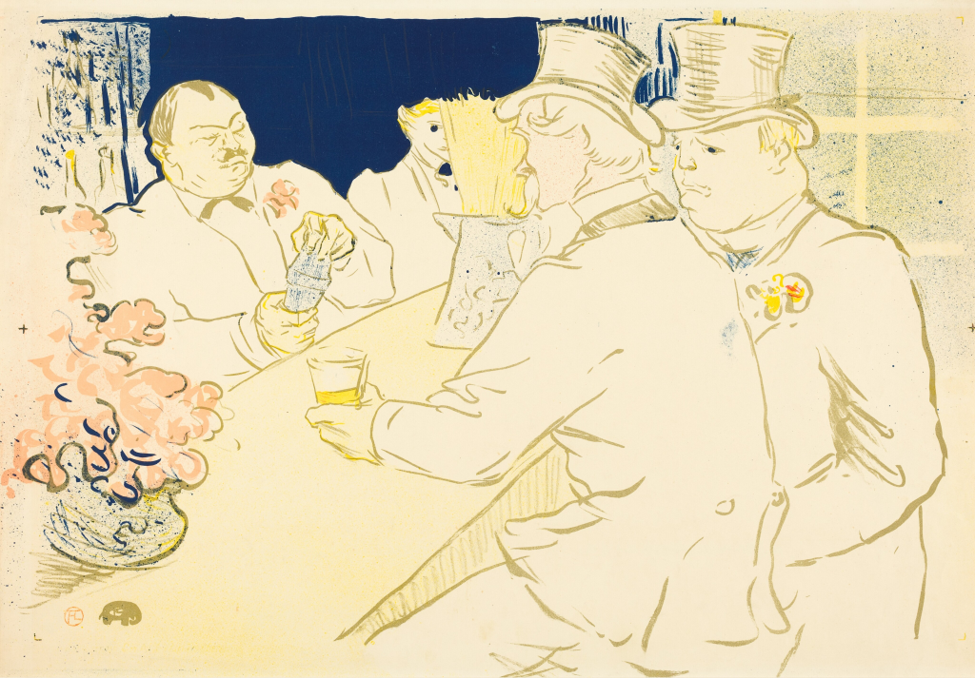
Sometime during the past ten years, the universal bartending 101 skill of mixing a classic dry martini, straight up with plain olives, has begun eluding a strong percentage of America’s bartenders.
I feel confident in making this anecdotally based assertion, as I have lived in and visited different places throughout the past decade and been drinking martinis longer than that. I increasingly find myself having to send what should be a slam-dunk order back to the bar for adjustment. The reason is mixologists not understanding what “dry” means and delivering a vermouth drink with a splash of gin instead of the reverse proportion. In one case, the server came back to me and explained that the mixologist had looked up “dry” and interpreted it as a vermouth-dominant recipe — so the mixologist assumed a heavier presence of dry vermouth automatically rendered the drink dry. In another case, when they heard “olives,” they assumed olive juice. Which is another problem, but we do not need to go there. And no, I’m not switching to lemon peels unless I am in someone’s home and this is how they dress a martini, like Bud Johns used to do. What a guy.
As these misfires make their way back to the maker, I always thank the server and ask that they convey my thanks to the mixologist for their patience with my specificity. Yet at $15-20 a pop, I’m beginning to rethink this magnanimity. In fact, to my friends’ eye-rolling amusement, I have developed a comedy routine that I use when ordering a martini — just to make sure I’m more Mother Teresa than Evita Peron as I seek to prevent a debacle that might take another twenty minutes to correct.
This reaction is not a prima donna thing; it is authentic confusion over WTH is going on in the taverns of America, just one of the workplaces where we nice people are fumbling the basics. The Martini Problem is symbolic of ennui in one’s field, lack of preparation, absent management and what passes for qualification in today’s enterprises. For those of us who have one job, we might as well cultivate interest in it and learn everything we can about how to do it. Which is why I’m writing this, actually. One establishment’s martini is another’s widget, financial statement or strategic plan. Passion and joy make things better because they make you want to learn and perhaps even strive for perfection.
So instead of being/staying cranky about this, I’m using it as an opportunity to ponder the causes as well as the cures for this condition. And invoking my great-uncle Anthony “Stamp” Stampone, who called the work bartending at his heralded tavern in Roseto, Pennsylvania, and would probably have a few choice words about the inflated mixology terminology.
Cause: Team members figure they can look everything up on the internet — or ask an LLM — in real time, and this is more than enough preparation. Cure: Practicing under the supervision of an experienced team member while keeping the phone within reach. If a crutch is needed, it should be training and experience, readily available to the employee from colleagues who have done the job, too. Because the LLMs can be wrong and often are.
Cause: Even when team members use an LLM to get them through a task, they don’t understand what they are seeing in that handy little video. Cure: Making sure that as we use digital sources for training, we also teach the value of attention and concentration, going back over a problem, and remembering that the purpose of our work, whatever it is, is to satisfy the customer. I wonder if Peter Drucker drank martinis.
Cause: Critical listening and thinking are not high on the performance list. Cure: The worker taking enough joy in labor to invent approaches that save time and make things better, the employer filling gaps that training programs and higher education may have left behind, and the customer being part of the process. In one establishment I have come to favor, after I went through the routine in placing my order directly with the bartender, he shared his trick for the super dry martini. He uses a spritzer filled with vermouth to lightly coat the inside of the chilled glass with vermouth first before adding the Beefeater [rest in peace, Sean Connery aka James Bond, but the martini is about gin]. This opened wide a conversation with the bartender about his work and the pleasure he takes in innovating product and pleasing customers. The customer has something of a job here, too — to convey respect, interest, and gratitude to the person who takes satisfaction in hosting you creatively and kindly.
As we get ourselves through this era with a little help from our friends on the frontier — be it artificial intelligence, authentic bartending, or sincere management — we should remember how good we’ve got it and how much better we can make it. While sending up a toast to the inventors, from tech bros to bartenders.